


Triggering Receptor Expressed on Myeloid Cells 2 (TREM2)
1. Introduction
Triggering receptor expressed on myeloid cells 2 (TREM2) is a transmembrane immunoglobulin superfamily receptor that has emerged as a major regulator of microglial activation, lipid sensing, phagocytosis, and inflammatory control in neurodegenerative disease. It is primarily expressed in microglia located in the central nervous system (CNS); however, it is also found in various myeloid lineage cells, such as macrophages, osteoclasts, and dendritic cells (Wang et al., 2015). Microglia utilize TREM2 to identify damage-related molecular signals and to engage in lipid-sensing activities, allowing them to coordinate a response to tissue injury, thereby maintaining cellular homeostasis (Deczkowska et al., 2018). Following the identification of a rare genetic variant (R47H) of TREM2 that was linked to an increased risk of developing late-onset Alzheimer's disease (AD), TREM2 rapidly moved from being considered a generalized immune receptor to being identified as a potential modifying factor in neurodegeneration (Park et al., 2017). Unlike classical pro-inflammatory receptors that primarily serve to amplify an immune response, it appears to facilitate a complex program of microglial function, including survival, migration, clearing of dead/dying neuronal debris, modulation of lipid metabolism, and adaptation to the chronic stress associated with neurodegenerative diseases (Ulland and Colonna, 2018).
In Alzheimer’s disease, TREM2 contributes to microglial responses to amyloid plaque-associated lipid signals, damaged neurons, and chronic neuroinflammatory stress (Wang et al., 2015). Evidence from experimental studies indicates that TREM2 contributes to the establishment of disease-associated microglial states, which are linked to plaque-adjacent microglial responses, phagocytic activity, lipid-metabolism changes, and tissue-remodeling functions (Deczkowska et al., 2018; Keren-Shaul et al., 2017). However, similar to many other receptors, TREM2 appears to have a context-dependent role. It may support protective microglial responses during earlier stages of AD, but prolonged or poorly regulated activation may contribute to chronic inflammatory damage (Gratuze et al., 2018).
Studies supporting the clinical relevance of TREM2 include the detection of soluble forms of TREM2 (sTREM2) in both cerebrospinal fluid (CSF) and peripheral circulation. Soluble TREM2 has become increasingly studied as a possible biomarker for measuring levels of activated microglia in patients diagnosed with AD and other neurodegenerative disorders (Nabizadeh et al., 2024). Additionally, several therapeutic approaches utilizing TREM2-agonist monoclonal antibodies are currently being developed as potential agents capable of enhancing beneficial microglial responses while improving overall control of disease (Long et al., 2024). Therefore, TREM2 represents an integral molecular link between innate immune-sensing functions and neurodegenerative pathologies, and it serves as a basis for developing biomarkers to track disease progression and guide targeted therapies.
2. Molecular Architecture and Receptor Organization
TREM2 is characterized as a type I transmembrane receptor consisting of an extracellular immunoglobulin-like domain, a connecting stalk area, one transmembrane helix, and a short cytoplasmic domain. The extracellular domain is primarily responsible for ligand recognition, while the transmembrane helix allows TREM2 to interact with adaptor proteins that transmit signals into the cell (Konishi and Kiyama, 2018). Because TREM2 lacks a long cytoplasmic tail with strong signaling motifs, it largely relies on adaptor proteins such as DNAX-activating protein of 12 kDa (DAP12), also known as TYROBP. The TREM2-DAP12 complex is the primary component of TREM2 signaling. DAP12 possesses an immunoreceptor tyrosine-based activation motif that is phosphorylated upon TREM2 activation. This, in turn, recruits spleen tyrosine kinase (SYK), activating downstream pathways associated with survival, phagocytosis, chemotaxis, inflammation, and metabolic adaptation (Ulland and Colonna, 2018). This relationship indicates that TREM2 is not just a binding molecule but also a cellular signaling apparatus that translates recognition of an external threat into an orchestrated microglial response.
As shown in Figure 1, TREM2 is organized as a single-pass transmembrane immunoreceptor containing an extracellular Ig-like ligand-binding domain, a stalk region, a transmembrane segment, and a short cytoplasmic tail, with several disease-associated variants located mainly within the extracellular region (Li et al., 2025). Mutations associated with diseases demonstrate the importance of TREM2's structure. For example, the R47H variant has been associated with altered TREM2 glycosylation and protein stability, while functional studies show that several Alzheimer’s disease-associated TREM2 variants can modify ligand-dependent activation (Park et al., 2017; Song et al., 2017). The other variants may influence the protein's folding, surface expression, ligand recognition, or protease cleavage. These alterations help explain why TREM2 mutants can modulate disease susceptibility without necessarily causing a disease independently.
Figure 1. Structural architecture and disease-associated mutations of TREM2.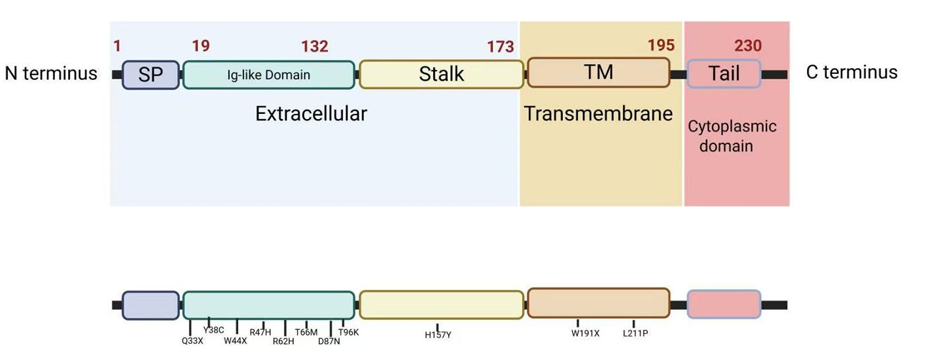
1. Ligand Recognition and Microglial Signaling
The TREM2 receptor has a large number of recognized ligands, not just a single compound. Some of these ligands include phospholipids, lipoproteins, apolipoproteins, bacterial compounds, cellular fragments from dying cells, and disease-specific lipid signals associated with various diseases. The ability of TREM2 to recognize a wide variety of ligands allows TREM2-expressing microglial cells to perceive their environment in terms of local tissue damage. In Alzheimer's disease models, TREM2 has been demonstrated to support the microglial response to amyloid-β deposits through the detection of damage-associated lipid patterns (Wang et al., 2015). Following ligand engagement, TREM2 primarily signals through two major pathways: DAP12/SYK. The activation of these pathways leads to the regulation of the proliferation, chemotactic movement, survival, and phagocytic activity of microglia (Ulland and Colonna, 2018). Additionally, TREM2 plays an important role in regulating cellular metabolic processes that are required to sustain the high-energy demands of activated microglia. Because microglia can rapidly transition from a resting state, this metabolic adaptation is critical to sustaining an active disease-responsive state (Deczkowska et al., 2018). It is essential to understand TREM2 not only as a purely inflammatory marker. In many settings, it helps microglia to control excessive tissue damage, remove debris, and reduce uncontrolled inflammatory responses. However, depending on the stage of disease progression, the specific ligands bound by TREM2, the state of the microglial cell, and local inflammatory signals, the overall effect of TREM2 may vary (Ulland and Colonna, 2018).
2. TREM2 and Disease-Associated Microglia
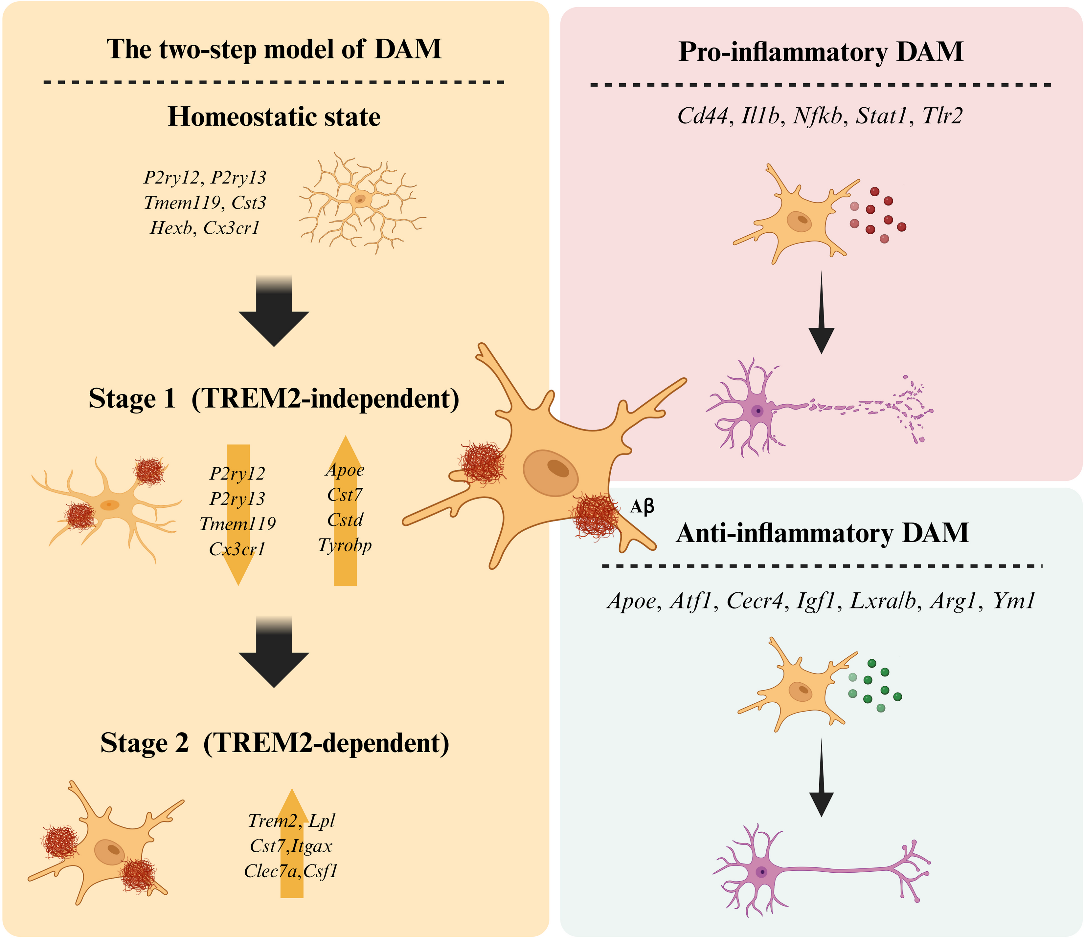
The discovery of disease-associated microglia represents one of the most important findings in TREM2 research. Disease-associated microglia have been identified through single-cell RNA sequencing, representing a distinct microglial state that forms in response to neurodegenerative processes, and is characterized by changes in lipid metabolism, increased expression of genes involved with phagocytic activity, and decreased levels of gene products associated with normal microglial function (Keren-Shaul et al., 2017). Disease-associated microglia appear to develop sequentially, with an initial phase of early activation that occurs partly in the absence of TREM2. However, the complete transformation of microglia into the disease-associated state does require TREM2 signaling. The identification of disease-associated microglia has provided an entirely new perspective on the role of microglia in Alzheimer's disease. Rather than being simply passive inflammatory bystanders, microglia are now recognized as active participants in the pathology of Alzheimer's disease, capable of surrounding amyloid deposits, removing debris, modulating local toxicity, and influencing the overall course of the disease (Deczkowska et al., 2018). As shown in Figure 2, disease-associated microglia are proposed to arise through a two-step process in which homeostatic microglia first enter an intermediate activation state, followed by a Trem2-dependent step that supports full DAM activation, phagocytic capacity, and lipid metabolism (Cheng and Ho, 2025). TREM2 plays a key role in activating these microglia, allowing them to transition from their resting homeostatic state to a responsive state upon cellular damage. Although some aspects of the disease-associated microglial response are clearly beneficial, such as reducing plaque toxicity and eliminating damaged proteins and other cellular components, there also exist potential detrimental effects of long-term microglial activation, including continued inflammation, loss of synapses, and disruption of tissue remodeling (Ulland and Colonna, 2018). Therefore, the best interpretation for TREM2 is that it regulates microglial states.
Figure 2. Two-step TREM2-dependent activation of disease-associated microglia.
1. Role of TREM2 in Alzheimer’s Disease and Neurodegeneration
TREM2 is primarily linked to Alzheimer's disease due to rare mutations within the TREM2 gene that are likely to increase the risk of developing this type of disease. The R47H mutation in TREM2 has been shown to affect microglial ligand recognition, thereby attenuating microglial responses to neurodegenerative stimuli (Park et al., 2017). TREM2 deficiency in animal models has been shown to have two main effects on microglial function: TREM2-deficient microglia exhibit reduced aggregation around amyloid plaques and altered ability to respond to damage caused by amyloid deposits (Wang et al., 2015). Furthermore, studies indicate that TREM2 plays roles in both tau pathologies and neuroinflammation. The timing of TREM2-mediated microglial activation may play a critical role in determining whether this response is beneficial or harmful. In early disease stages, TREM2-mediated microglial activation may limit the spread of pathological processes, whereas in late disease, continued activation may reduce the response's effectiveness, contributing to damaging inflammatory conditions (Nabizadeh et al., 2024). TREM2 is also relevant beyond Alzheimer’s disease, including frontotemporal dementia, Parkinson’s disease-related studies, multiple sclerosis-related inflammatory responses, and traumatic brain injury research (Gratuze et al., 2018). Therefore, TREM2 is not merely a protein specific to Alzheimer’s disease but rather a general regulatory mechanism of myeloid cell responses to tissue degeneration.
2. Soluble TREM2 and Biomarker Development
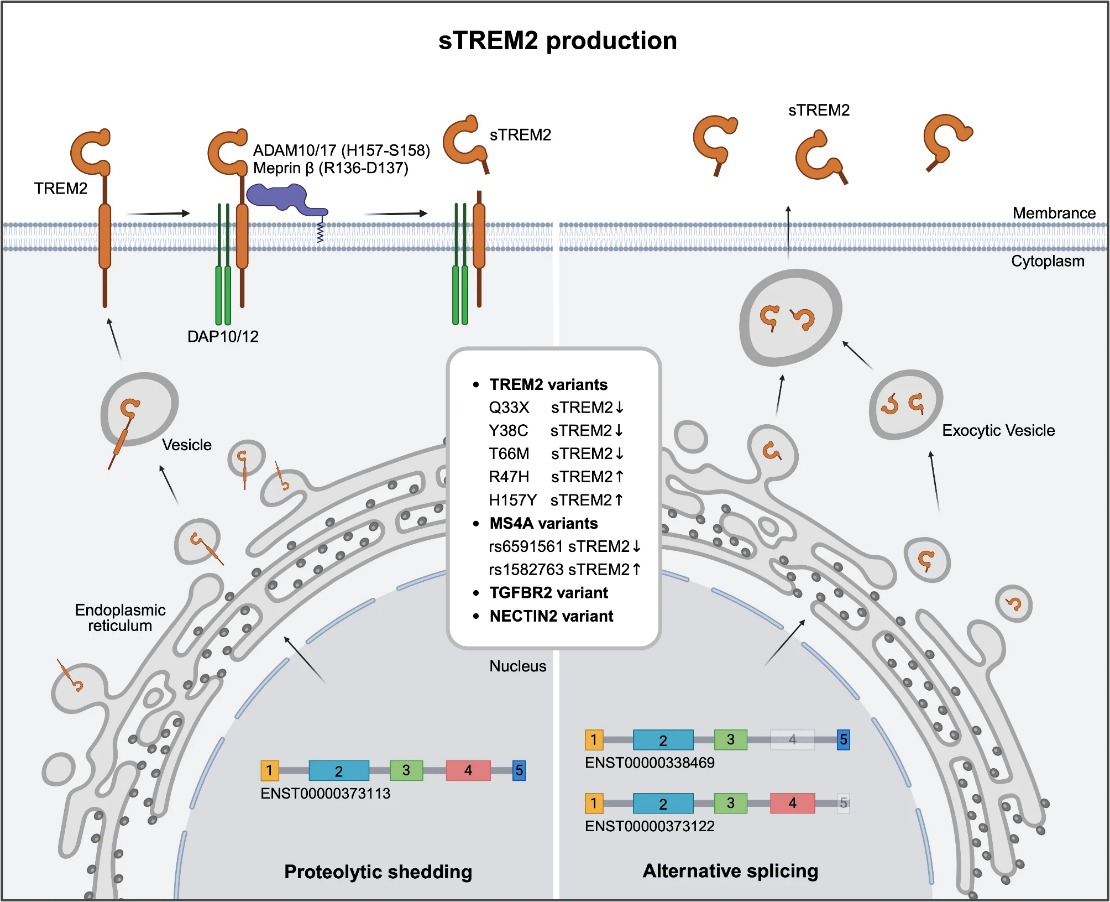
Soluble forms of TREM2 are produced by cleavage of TREM2 from the cell surface and may be found in both cerebrospinal fluid (CSF) and blood; therefore, this soluble form can be a potential source of data for researchers interested in using TREM2 as a biomarker (Nabizadeh et al., 2024). Recent studies also indicate that soluble TREM2 is generated when the extracellular domain of membrane-bound TREM2 is released from microglia through proteolytic cleavage, while alternatively spliced TREM2 transcripts can also produce soluble forms. As shown in Figure 3, these mechanisms explain why sTREM2 can be detected in extracellular fluids and studied as a biomarker of microglial activation in Alzheimer’s disease (Zhang et al., 2025). Furthermore, studies on sTREM2 have generally interpreted it as an indicator of microglial activation; however, depending on the disease stage and specific measurement, there is some ambiguity in how sTREM2 results relate to the underlying biological process.
Clinical studies have reported relationships between CSF sTREM2 and other AD-related biomarkers, including amyloid, tau, and neurodegenerative markers. While these findings suggest that sTREM2 may serve as a marker of AD, the fact that the amount of sTREM2 present in CSF may change during different stages of disease suggests that sTREM2 cannot serve as a definitive diagnostic marker due to the variability in amounts of sTREM2 present during disease progression (Wang et al., 2024). In addition, while sTREM2 may be elevated during active disease states, the elevation may reflect the body's immune response to damage rather than a unique characteristic of AD. Therefore, sTREM2 represents a potentially useful dynamic biomarker of microglial responses rather than a static diagnostic tool. The TREM2 biomarker is also important for clinical trials. If a therapy aims to activate TREM2, then changes in sTREM2 or related microglial markers may help show whether the drug is engaging its target (Long et al., 2024). As a result, sTREM2 represents an interface between molecular biology and translational monitoring.
Figure 3. Generation of soluble TREM2 through receptor shedding and alternative splicing.
(Zhang et al., 2025)
1. Therapeutic Targeting of TREM2
There is increasing interest in using TREM2 as an emerging therapeutic target due to its potential to enhance microglial protective functions, thereby slowing neuronal degeneration. Agonistic antibody treatment has emerged as one of the most developed experimental approaches for targeting TREM2. These antibodies stimulate TREM2 signaling and improve phagocytic function, increase microglial survival, and enhance interactions with amyloid plaques (Schlepckow et al., 2023). The most well-documented investigational agonistic antibody targeting TREM2 is AL002. Initial preclinical and first-in-human studies demonstrated that AL002 engages the TREM2 pathway and supported further investigation of its clinical application in Alzheimer's disease research (Long et al., 2024). However, the use of TREM2 therapy remains challenging due to variability in microglial activation responses, which depend on factors such as disease onset timing, dose levels, and the specific tissue context. Therefore, future applications of TREM2 will need to consider biomarkers and appropriate patient selection criteria. In addition, there is increasing evidence that TREM2 plays a role in cancer immunology. Some tumor-associated macrophages have been shown to express TREM2 and may inhibit the induction of effective anti-tumor immunity by creating suppressive tumor microenvironments (Molgora et al., 2023). Recent studies suggest that TREM2-expressing myeloid cells may modulate tumor growth, evade immune surveillance, and affect responsiveness to anti-cancer therapies, thus extending the scope of TREM2 beyond neuroscience to oncology and immunotherapies (Huang and Fang, 2025).
2. Experimental Approaches for Studying TREM2
TREM2 can be evaluated using a variety of techniques, including molecular, cellular, imaging, and biomarker-based approaches. Techniques that assess TREM2 at the gene level, such as quantitative RT-PCR and RNA sequencing, are used to measure the amount of TREM2 mRNA and related microglial states (Keren-Shaul et al., 2017). Single-cell RNA sequencing is particularly useful for distinguishing homeostatic microglia from disease-associated microglia. This is important because total tissue expression may hide important cell-state differences. Protein-based techniques include Western blots, immunofluorescence, immunohistochemical staining, and flow cytometry to detect TREM2 abundance, localization, and microglial distribution around amyloid plaques or damaged tissue (Wang et al., 2015). The ability to use techniques such as ELISA and other immunoassays enables researchers to measure soluble TREM2 in CSF or plasma, providing valuable information for potential biomarker discovery and therapeutic monitoring. However, functional studies are required to validate these mechanisms. These studies may include phagocytic assays, ligand binding assays, DAP12 phosphorylation analysis, SYK activation assays, microglial survival assays, and disease model experiments (Ulland and Colonna, 2018). Important endpoints in Alzheimer's disease models include plaque burden, plaque-associated microglia, synaptic markers, and expression of genes involved in inflammation. These methods provide researchers with the tools necessary to determine whether TREM2 is merely expressed or plays a role in regulating immune functions relevant to the progression of neurodegenerative diseases.
3. Future Directions
Future TREM2 studies should focus on precision rather than the general activation of TREM2. The timing of when TREM2 stimulation is most likely to provide benefits as opposed to harm is a critical question in Alzheimer's disease. This is particularly important in Alzheimer’s disease because microglial responses may differ between early amyloid accumulation, tau spread, and advanced neurodegeneration (Nabizadeh et al., 2024). Biomarkers for targeted treatments using TREM2 are another important area. If TREM2-targeted therapies are used, researchers will need reliable markers to confirm target engagement and identify suitable patients. sTREM2, microglial PET imaging, inflammatory markers, and genetic profiling may become part of this strategy (Long et al., 2024). These strategies may help identify patients most likely to benefit from TREM2-targeted therapy and reduce the use of inappropriate treatments. Although TREM2 research has been dominated by Alzheimer’s disease, its relevance is increasingly being explored in other disease contexts. However, there are many other areas where TREM2 activity plays an important role. Specifically, its role in tumor-associated macrophage biology, inflammatory tissue remodeling, and periphery-based regulation of the immune system is currently being developed. This broad view can lead to the use of TREM2 in immunotherapy development, chronic inflammation, and tissue repair (Huang and Fang, 2025).
4. Conclusions
TREM2 functions as an important immunoregulatory receptor that integrates lipid signaling, microglial activation, phagocytosis, and regulation of inflammation in neurodegenerative diseases. By recognizing DAMPs (damage-associated molecular patterns) and signaling through the DAP12-SYK pathway, microglia can mount a synergistic response to amyloid plaques, apoptotic cell bodies, and tissue damage. The role of TREM2 is evolving beyond its use as a marker of microglial activation to that of a regulatory molecule controlling various forms of microglial disease states, with particular relevance to Alzheimer's disease. The clinical significance of TREM2 is supported by genetic, biomarker, and therapeutic research studies. Disease-associated TREM2 variants, including R47H, can alter receptor stability, ligand-dependent activation, and microglial responses, whereas soluble TREM2 has emerged as a useful surrogate measure of microglial activity in cerebrospinal fluid and blood-based biomarker research. In addition, agonistic antibodies against TREM2 are explored as potential therapeutics to promote favorable microglial responses in patients with Alzheimer's disease. Thus, TREM2 serves as a critical molecular link between innate immunity and neurodegenerative pathology. However, due to the context-dependent nature of microglial activation, it can act as a protective mechanism during the initial stages of disease but contribute to detrimental levels of chronic inflammation in late-stage diseases. Therefore, future research should consider disease stage, patient stratification, and assessment of soluble biomarkers of TREM2 signaling. This will help determine whether targeting TREM2 can progress from a promising mechanism to a clinically meaningful intervention.
References
Cheng, Y.-H. and Ho, M.S. (2025). Disease-associated microglia in neurodegenerative diseases: Friend or foe? PLOS Biology, 23(10), e3003426. https://doi.org/10.1371/journal.pbio.3003426
Deczkowska, A., Keren-Shaul, H., Weiner, A., Colonna, M., Schwartz, M. and Amit, I. (2018). Disease-associated microglia: a universal immune sensor of neurodegeneration. Cell, 173(5), pp. 1073–1081. https://doi.org/10.1016/j.cell.2018.05.003
Gratuze, M., Leyns, C.E.G. and Holtzman, D.M. (2018). New insights into the role of TREM2 in Alzheimer’s disease. Molecular Neurodegeneration, 13, 66. https://doi.org/10.1186/s13024-018-0298-9
Huang, Y. and Fang, W. (2025). TREM2-mediated regulation of myeloid cells in the tumor microenvironment: new insights and therapeutic prospects. NPJ Precision Oncology, 9, 359. https://doi.org/10.1038/s41698-025-01152-9
Keren-Shaul, H., Spinrad, A., Weiner, A., Matcovitch-Natan, O., Dvir-Szternfeld, R., Ulland, T.K., David, E., Baruch, K., Lara-Astaiso, D., Toth, B., Itzkovitz, S., Colonna, M., Schwartz, M. and Amit, I. (2017). A unique microglia type associated with restricting development of Alzheimer’s disease. Cell, 169(7), pp. 1276–1290.e17. https://doi.org/10.1016/j.cell.2017.05.018
Konishi, H. and Kiyama, H. (2018). Microglial TREM2/DAP12 signaling: a double-edged sword in neural diseases. Frontiers in Cellular Neuroscience, 12, 206. https://doi.org/10.3389/fncel.2018.00206
Li, L., Zheng, X., Ma, H., Zhu, M., Li, X., Sun, X. and Feng, X. (2025). TREM2 in neurodegenerative diseases: mechanisms and therapeutic potential. Cells, 14(17), 1387. https://doi.org/10.3390/cells14171387
Long, H., Simmons, A., Mayorga, A., Burgess, B., Nguyen, T., Budda, B., Rychkova, A., Rhinn, H., Tassi, I., Ward, M., Yeh, F., Schwabe, T., Paul, R., Kenkare-Mitra, S. and Rosenthal, A. (2024). Preclinical and first-in-human evaluation of AL002, a novel TREM2 agonistic antibody for Alzheimer’s disease. Alzheimer’s Research & Therapy, 16, 235. https://doi.org/10.1186/s13195-024-01599-1
Molgora, M., Liu, Y.A., Colonna, M. and Cella, M. (2023). TREM2: a new player in the tumor microenvironment. Seminars in Immunology, 67, 101739. https://doi.org/10.1016/j.smim.2023.101739
Nabizadeh, F., Seyedmirzaei, H. and Karami, S. (2024). Neuroimaging biomarkers and CSF sTREM2 levels in Alzheimer’s disease: a longitudinal study. Scientific Reports, 14, 15318. https://doi.org/10.1038/s41598-024-66211-w
Park, J.S., Ji, I.J., An, H.J., Kang, M.J., Kang, S.W., Kim, D.H. and Yoon, S.Y. (2017). The Alzheimer’s disease-associated R47H variant of TREM2 has an altered glycosylation pattern and protein stability. Frontiers in Neuroscience, 10, 618. https://doi.org/10.3389/fnins.2016.00618
Schlepckow, K., Morenas-Rodríguez, E., Hong, S. and Haass, C. (2023). Stimulation of TREM2 with agonistic antibodies: an emerging therapeutic option for Alzheimer’s disease. The Lancet Neurology, 22(11), pp. 1048–1060. https://doi.org/10.1016/S1474-4422(23)00247-8
Song, W., Hooli, B., Mullin, K., Jin, S.C., Cella, M., Ulland, T.K., Wang, Y., Tanzi, R.E. and Colonna, M. (2017). Alzheimer’s disease-associated TREM2 variants exhibit either decreased or increased ligand-dependent activation. Alzheimer’s & Dementia, 13(4), pp. 381–387. https://doi.org/10.1016/j.jalz.2016.07.004
Ulland, T.K. and Colonna, M. (2018). TREM2: a key player in microglial biology and Alzheimer disease. Nature Reviews Neurology, 14, pp. 667–675. https://doi.org/10.1038/s41582-018-0072-1
Wang, R., Zhan, Y., Zhu, W., Yang, Q. and Pei, J. (2024). Association of soluble TREM2 with Alzheimer’s disease and mild cognitive impairment: a systematic review and meta-analysis. Frontiers in Aging Neuroscience, 16, 1407980. https://doi.org/10.3389/fnagi.2024.1407980
Wang, Y., Cella, M., Mallinson, K., Ulrich, J.D., Young, K.L., Robinette, M.L., Gilfillan, S., Krishnan, G.M., Sudhakar, S., Zinselmeyer, B.H., Holtzman, D.M., Cirrito, J.R. and Colonna, M. (2015). TREM2 lipid sensing sustains the microglial response in an Alzheimer’s disease model. Cell, 160(6), pp. 1061–1071. https://doi.org/10.1016/j.cell.2015.01.049
Zhang, L., Xiang, X., Li, Y., Bu, G. and Chen, X.-F. (2025). TREM2 and sTREM2 in Alzheimer’s disease: from mechanisms to therapies. Molecular Neurodegeneration, 20, 43. https://doi.org/10.1186/s13024-025-00834-z
Triggering receptor expressed on myeloid cells 2 (TREM2) is a transmembrane immunoglobulin superfamily receptor that has emerged as a major regulator of microglial activation, lipid sensing, phagocytosis, and inflammatory control in neurodegenerative disease. It is primarily expressed in microglia located in the central nervous system (CNS); however, it is also found in various myeloid lineage cells, such as macrophages, osteoclasts, and dendritic cells (Wang et al., 2015). Microglia utilize TREM2 to identify damage-related molecular signals and to engage in lipid-sensing activities, allowing them to coordinate a response to tissue injury, thereby maintaining cellular homeostasis (Deczkowska et al., 2018). Following the identification of a rare genetic variant (R47H) of TREM2 that was linked to an increased risk of developing late-onset Alzheimer's disease (AD), TREM2 rapidly moved from being considered a generalized immune receptor to being identified as a potential modifying factor in neurodegeneration (Park et al., 2017). Unlike classical pro-inflammatory receptors that primarily serve to amplify an immune response, it appears to facilitate a complex program of microglial function, including survival, migration, clearing of dead/dying neuronal debris, modulation of lipid metabolism, and adaptation to the chronic stress associated with neurodegenerative diseases (Ulland and Colonna, 2018).
In Alzheimer’s disease, TREM2 contributes to microglial responses to amyloid plaque-associated lipid signals, damaged neurons, and chronic neuroinflammatory stress (Wang et al., 2015). Evidence from experimental studies indicates that TREM2 contributes to the establishment of disease-associated microglial states, which are linked to plaque-adjacent microglial responses, phagocytic activity, lipid-metabolism changes, and tissue-remodeling functions (Deczkowska et al., 2018; Keren-Shaul et al., 2017). However, similar to many other receptors, TREM2 appears to have a context-dependent role. It may support protective microglial responses during earlier stages of AD, but prolonged or poorly regulated activation may contribute to chronic inflammatory damage (Gratuze et al., 2018).
Studies supporting the clinical relevance of TREM2 include the detection of soluble forms of TREM2 (sTREM2) in both cerebrospinal fluid (CSF) and peripheral circulation. Soluble TREM2 has become increasingly studied as a possible biomarker for measuring levels of activated microglia in patients diagnosed with AD and other neurodegenerative disorders (Nabizadeh et al., 2024). Additionally, several therapeutic approaches utilizing TREM2-agonist monoclonal antibodies are currently being developed as potential agents capable of enhancing beneficial microglial responses while improving overall control of disease (Long et al., 2024). Therefore, TREM2 represents an integral molecular link between innate immune-sensing functions and neurodegenerative pathologies, and it serves as a basis for developing biomarkers to track disease progression and guide targeted therapies.
2. Molecular Architecture and Receptor Organization
TREM2 is characterized as a type I transmembrane receptor consisting of an extracellular immunoglobulin-like domain, a connecting stalk area, one transmembrane helix, and a short cytoplasmic domain. The extracellular domain is primarily responsible for ligand recognition, while the transmembrane helix allows TREM2 to interact with adaptor proteins that transmit signals into the cell (Konishi and Kiyama, 2018). Because TREM2 lacks a long cytoplasmic tail with strong signaling motifs, it largely relies on adaptor proteins such as DNAX-activating protein of 12 kDa (DAP12), also known as TYROBP. The TREM2-DAP12 complex is the primary component of TREM2 signaling. DAP12 possesses an immunoreceptor tyrosine-based activation motif that is phosphorylated upon TREM2 activation. This, in turn, recruits spleen tyrosine kinase (SYK), activating downstream pathways associated with survival, phagocytosis, chemotaxis, inflammation, and metabolic adaptation (Ulland and Colonna, 2018). This relationship indicates that TREM2 is not just a binding molecule but also a cellular signaling apparatus that translates recognition of an external threat into an orchestrated microglial response.
As shown in Figure 1, TREM2 is organized as a single-pass transmembrane immunoreceptor containing an extracellular Ig-like ligand-binding domain, a stalk region, a transmembrane segment, and a short cytoplasmic tail, with several disease-associated variants located mainly within the extracellular region (Li et al., 2025). Mutations associated with diseases demonstrate the importance of TREM2's structure. For example, the R47H variant has been associated with altered TREM2 glycosylation and protein stability, while functional studies show that several Alzheimer’s disease-associated TREM2 variants can modify ligand-dependent activation (Park et al., 2017; Song et al., 2017). The other variants may influence the protein's folding, surface expression, ligand recognition, or protease cleavage. These alterations help explain why TREM2 mutants can modulate disease susceptibility without necessarily causing a disease independently.
Figure 1. Structural architecture and disease-associated mutations of TREM2.
1. Ligand Recognition and Microglial Signaling
The TREM2 receptor has a large number of recognized ligands, not just a single compound. Some of these ligands include phospholipids, lipoproteins, apolipoproteins, bacterial compounds, cellular fragments from dying cells, and disease-specific lipid signals associated with various diseases. The ability of TREM2 to recognize a wide variety of ligands allows TREM2-expressing microglial cells to perceive their environment in terms of local tissue damage. In Alzheimer's disease models, TREM2 has been demonstrated to support the microglial response to amyloid-β deposits through the detection of damage-associated lipid patterns (Wang et al., 2015). Following ligand engagement, TREM2 primarily signals through two major pathways: DAP12/SYK. The activation of these pathways leads to the regulation of the proliferation, chemotactic movement, survival, and phagocytic activity of microglia (Ulland and Colonna, 2018). Additionally, TREM2 plays an important role in regulating cellular metabolic processes that are required to sustain the high-energy demands of activated microglia. Because microglia can rapidly transition from a resting state, this metabolic adaptation is critical to sustaining an active disease-responsive state (Deczkowska et al., 2018). It is essential to understand TREM2 not only as a purely inflammatory marker. In many settings, it helps microglia to control excessive tissue damage, remove debris, and reduce uncontrolled inflammatory responses. However, depending on the stage of disease progression, the specific ligands bound by TREM2, the state of the microglial cell, and local inflammatory signals, the overall effect of TREM2 may vary (Ulland and Colonna, 2018).
2. TREM2 and Disease-Associated Microglia
The discovery of disease-associated microglia represents one of the most important findings in TREM2 research. Disease-associated microglia have been identified through single-cell RNA sequencing, representing a distinct microglial state that forms in response to neurodegenerative processes, and is characterized by changes in lipid metabolism, increased expression of genes involved with phagocytic activity, and decreased levels of gene products associated with normal microglial function (Keren-Shaul et al., 2017). Disease-associated microglia appear to develop sequentially, with an initial phase of early activation that occurs partly in the absence of TREM2. However, the complete transformation of microglia into the disease-associated state does require TREM2 signaling. The identification of disease-associated microglia has provided an entirely new perspective on the role of microglia in Alzheimer's disease. Rather than being simply passive inflammatory bystanders, microglia are now recognized as active participants in the pathology of Alzheimer's disease, capable of surrounding amyloid deposits, removing debris, modulating local toxicity, and influencing the overall course of the disease (Deczkowska et al., 2018). As shown in Figure 2, disease-associated microglia are proposed to arise through a two-step process in which homeostatic microglia first enter an intermediate activation state, followed by a Trem2-dependent step that supports full DAM activation, phagocytic capacity, and lipid metabolism (Cheng and Ho, 2025). TREM2 plays a key role in activating these microglia, allowing them to transition from their resting homeostatic state to a responsive state upon cellular damage. Although some aspects of the disease-associated microglial response are clearly beneficial, such as reducing plaque toxicity and eliminating damaged proteins and other cellular components, there also exist potential detrimental effects of long-term microglial activation, including continued inflammation, loss of synapses, and disruption of tissue remodeling (Ulland and Colonna, 2018). Therefore, the best interpretation for TREM2 is that it regulates microglial states.
Figure 2. Two-step TREM2-dependent activation of disease-associated microglia.
1. Role of TREM2 in Alzheimer’s Disease and Neurodegeneration
TREM2 is primarily linked to Alzheimer's disease due to rare mutations within the TREM2 gene that are likely to increase the risk of developing this type of disease. The R47H mutation in TREM2 has been shown to affect microglial ligand recognition, thereby attenuating microglial responses to neurodegenerative stimuli (Park et al., 2017). TREM2 deficiency in animal models has been shown to have two main effects on microglial function: TREM2-deficient microglia exhibit reduced aggregation around amyloid plaques and altered ability to respond to damage caused by amyloid deposits (Wang et al., 2015). Furthermore, studies indicate that TREM2 plays roles in both tau pathologies and neuroinflammation. The timing of TREM2-mediated microglial activation may play a critical role in determining whether this response is beneficial or harmful. In early disease stages, TREM2-mediated microglial activation may limit the spread of pathological processes, whereas in late disease, continued activation may reduce the response's effectiveness, contributing to damaging inflammatory conditions (Nabizadeh et al., 2024). TREM2 is also relevant beyond Alzheimer’s disease, including frontotemporal dementia, Parkinson’s disease-related studies, multiple sclerosis-related inflammatory responses, and traumatic brain injury research (Gratuze et al., 2018). Therefore, TREM2 is not merely a protein specific to Alzheimer’s disease but rather a general regulatory mechanism of myeloid cell responses to tissue degeneration.
2. Soluble TREM2 and Biomarker Development
Soluble forms of TREM2 are produced by cleavage of TREM2 from the cell surface and may be found in both cerebrospinal fluid (CSF) and blood; therefore, this soluble form can be a potential source of data for researchers interested in using TREM2 as a biomarker (Nabizadeh et al., 2024). Recent studies also indicate that soluble TREM2 is generated when the extracellular domain of membrane-bound TREM2 is released from microglia through proteolytic cleavage, while alternatively spliced TREM2 transcripts can also produce soluble forms. As shown in Figure 3, these mechanisms explain why sTREM2 can be detected in extracellular fluids and studied as a biomarker of microglial activation in Alzheimer’s disease (Zhang et al., 2025). Furthermore, studies on sTREM2 have generally interpreted it as an indicator of microglial activation; however, depending on the disease stage and specific measurement, there is some ambiguity in how sTREM2 results relate to the underlying biological process.
Clinical studies have reported relationships between CSF sTREM2 and other AD-related biomarkers, including amyloid, tau, and neurodegenerative markers. While these findings suggest that sTREM2 may serve as a marker of AD, the fact that the amount of sTREM2 present in CSF may change during different stages of disease suggests that sTREM2 cannot serve as a definitive diagnostic marker due to the variability in amounts of sTREM2 present during disease progression (Wang et al., 2024). In addition, while sTREM2 may be elevated during active disease states, the elevation may reflect the body's immune response to damage rather than a unique characteristic of AD. Therefore, sTREM2 represents a potentially useful dynamic biomarker of microglial responses rather than a static diagnostic tool. The TREM2 biomarker is also important for clinical trials. If a therapy aims to activate TREM2, then changes in sTREM2 or related microglial markers may help show whether the drug is engaging its target (Long et al., 2024). As a result, sTREM2 represents an interface between molecular biology and translational monitoring.
Figure 3. Generation of soluble TREM2 through receptor shedding and alternative splicing.
(Zhang et al., 2025)
1. Therapeutic Targeting of TREM2
There is increasing interest in using TREM2 as an emerging therapeutic target due to its potential to enhance microglial protective functions, thereby slowing neuronal degeneration. Agonistic antibody treatment has emerged as one of the most developed experimental approaches for targeting TREM2. These antibodies stimulate TREM2 signaling and improve phagocytic function, increase microglial survival, and enhance interactions with amyloid plaques (Schlepckow et al., 2023). The most well-documented investigational agonistic antibody targeting TREM2 is AL002. Initial preclinical and first-in-human studies demonstrated that AL002 engages the TREM2 pathway and supported further investigation of its clinical application in Alzheimer's disease research (Long et al., 2024). However, the use of TREM2 therapy remains challenging due to variability in microglial activation responses, which depend on factors such as disease onset timing, dose levels, and the specific tissue context. Therefore, future applications of TREM2 will need to consider biomarkers and appropriate patient selection criteria. In addition, there is increasing evidence that TREM2 plays a role in cancer immunology. Some tumor-associated macrophages have been shown to express TREM2 and may inhibit the induction of effective anti-tumor immunity by creating suppressive tumor microenvironments (Molgora et al., 2023). Recent studies suggest that TREM2-expressing myeloid cells may modulate tumor growth, evade immune surveillance, and affect responsiveness to anti-cancer therapies, thus extending the scope of TREM2 beyond neuroscience to oncology and immunotherapies (Huang and Fang, 2025).
2. Experimental Approaches for Studying TREM2
TREM2 can be evaluated using a variety of techniques, including molecular, cellular, imaging, and biomarker-based approaches. Techniques that assess TREM2 at the gene level, such as quantitative RT-PCR and RNA sequencing, are used to measure the amount of TREM2 mRNA and related microglial states (Keren-Shaul et al., 2017). Single-cell RNA sequencing is particularly useful for distinguishing homeostatic microglia from disease-associated microglia. This is important because total tissue expression may hide important cell-state differences. Protein-based techniques include Western blots, immunofluorescence, immunohistochemical staining, and flow cytometry to detect TREM2 abundance, localization, and microglial distribution around amyloid plaques or damaged tissue (Wang et al., 2015). The ability to use techniques such as ELISA and other immunoassays enables researchers to measure soluble TREM2 in CSF or plasma, providing valuable information for potential biomarker discovery and therapeutic monitoring. However, functional studies are required to validate these mechanisms. These studies may include phagocytic assays, ligand binding assays, DAP12 phosphorylation analysis, SYK activation assays, microglial survival assays, and disease model experiments (Ulland and Colonna, 2018). Important endpoints in Alzheimer's disease models include plaque burden, plaque-associated microglia, synaptic markers, and expression of genes involved in inflammation. These methods provide researchers with the tools necessary to determine whether TREM2 is merely expressed or plays a role in regulating immune functions relevant to the progression of neurodegenerative diseases.
3. Future Directions
Future TREM2 studies should focus on precision rather than the general activation of TREM2. The timing of when TREM2 stimulation is most likely to provide benefits as opposed to harm is a critical question in Alzheimer's disease. This is particularly important in Alzheimer’s disease because microglial responses may differ between early amyloid accumulation, tau spread, and advanced neurodegeneration (Nabizadeh et al., 2024). Biomarkers for targeted treatments using TREM2 are another important area. If TREM2-targeted therapies are used, researchers will need reliable markers to confirm target engagement and identify suitable patients. sTREM2, microglial PET imaging, inflammatory markers, and genetic profiling may become part of this strategy (Long et al., 2024). These strategies may help identify patients most likely to benefit from TREM2-targeted therapy and reduce the use of inappropriate treatments. Although TREM2 research has been dominated by Alzheimer’s disease, its relevance is increasingly being explored in other disease contexts. However, there are many other areas where TREM2 activity plays an important role. Specifically, its role in tumor-associated macrophage biology, inflammatory tissue remodeling, and periphery-based regulation of the immune system is currently being developed. This broad view can lead to the use of TREM2 in immunotherapy development, chronic inflammation, and tissue repair (Huang and Fang, 2025).
4. Conclusions
TREM2 functions as an important immunoregulatory receptor that integrates lipid signaling, microglial activation, phagocytosis, and regulation of inflammation in neurodegenerative diseases. By recognizing DAMPs (damage-associated molecular patterns) and signaling through the DAP12-SYK pathway, microglia can mount a synergistic response to amyloid plaques, apoptotic cell bodies, and tissue damage. The role of TREM2 is evolving beyond its use as a marker of microglial activation to that of a regulatory molecule controlling various forms of microglial disease states, with particular relevance to Alzheimer's disease. The clinical significance of TREM2 is supported by genetic, biomarker, and therapeutic research studies. Disease-associated TREM2 variants, including R47H, can alter receptor stability, ligand-dependent activation, and microglial responses, whereas soluble TREM2 has emerged as a useful surrogate measure of microglial activity in cerebrospinal fluid and blood-based biomarker research. In addition, agonistic antibodies against TREM2 are explored as potential therapeutics to promote favorable microglial responses in patients with Alzheimer's disease. Thus, TREM2 serves as a critical molecular link between innate immunity and neurodegenerative pathology. However, due to the context-dependent nature of microglial activation, it can act as a protective mechanism during the initial stages of disease but contribute to detrimental levels of chronic inflammation in late-stage diseases. Therefore, future research should consider disease stage, patient stratification, and assessment of soluble biomarkers of TREM2 signaling. This will help determine whether targeting TREM2 can progress from a promising mechanism to a clinically meaningful intervention.
References
Cheng, Y.-H. and Ho, M.S. (2025). Disease-associated microglia in neurodegenerative diseases: Friend or foe? PLOS Biology, 23(10), e3003426. https://doi.org/10.1371/journal.pbio.3003426
Deczkowska, A., Keren-Shaul, H., Weiner, A., Colonna, M., Schwartz, M. and Amit, I. (2018). Disease-associated microglia: a universal immune sensor of neurodegeneration. Cell, 173(5), pp. 1073–1081. https://doi.org/10.1016/j.cell.2018.05.003
Gratuze, M., Leyns, C.E.G. and Holtzman, D.M. (2018). New insights into the role of TREM2 in Alzheimer’s disease. Molecular Neurodegeneration, 13, 66. https://doi.org/10.1186/s13024-018-0298-9
Huang, Y. and Fang, W. (2025). TREM2-mediated regulation of myeloid cells in the tumor microenvironment: new insights and therapeutic prospects. NPJ Precision Oncology, 9, 359. https://doi.org/10.1038/s41698-025-01152-9
Keren-Shaul, H., Spinrad, A., Weiner, A., Matcovitch-Natan, O., Dvir-Szternfeld, R., Ulland, T.K., David, E., Baruch, K., Lara-Astaiso, D., Toth, B., Itzkovitz, S., Colonna, M., Schwartz, M. and Amit, I. (2017). A unique microglia type associated with restricting development of Alzheimer’s disease. Cell, 169(7), pp. 1276–1290.e17. https://doi.org/10.1016/j.cell.2017.05.018
Konishi, H. and Kiyama, H. (2018). Microglial TREM2/DAP12 signaling: a double-edged sword in neural diseases. Frontiers in Cellular Neuroscience, 12, 206. https://doi.org/10.3389/fncel.2018.00206
Li, L., Zheng, X., Ma, H., Zhu, M., Li, X., Sun, X. and Feng, X. (2025). TREM2 in neurodegenerative diseases: mechanisms and therapeutic potential. Cells, 14(17), 1387. https://doi.org/10.3390/cells14171387
Long, H., Simmons, A., Mayorga, A., Burgess, B., Nguyen, T., Budda, B., Rychkova, A., Rhinn, H., Tassi, I., Ward, M., Yeh, F., Schwabe, T., Paul, R., Kenkare-Mitra, S. and Rosenthal, A. (2024). Preclinical and first-in-human evaluation of AL002, a novel TREM2 agonistic antibody for Alzheimer’s disease. Alzheimer’s Research & Therapy, 16, 235. https://doi.org/10.1186/s13195-024-01599-1
Molgora, M., Liu, Y.A., Colonna, M. and Cella, M. (2023). TREM2: a new player in the tumor microenvironment. Seminars in Immunology, 67, 101739. https://doi.org/10.1016/j.smim.2023.101739
Nabizadeh, F., Seyedmirzaei, H. and Karami, S. (2024). Neuroimaging biomarkers and CSF sTREM2 levels in Alzheimer’s disease: a longitudinal study. Scientific Reports, 14, 15318. https://doi.org/10.1038/s41598-024-66211-w
Park, J.S., Ji, I.J., An, H.J., Kang, M.J., Kang, S.W., Kim, D.H. and Yoon, S.Y. (2017). The Alzheimer’s disease-associated R47H variant of TREM2 has an altered glycosylation pattern and protein stability. Frontiers in Neuroscience, 10, 618. https://doi.org/10.3389/fnins.2016.00618
Schlepckow, K., Morenas-Rodríguez, E., Hong, S. and Haass, C. (2023). Stimulation of TREM2 with agonistic antibodies: an emerging therapeutic option for Alzheimer’s disease. The Lancet Neurology, 22(11), pp. 1048–1060. https://doi.org/10.1016/S1474-4422(23)00247-8
Song, W., Hooli, B., Mullin, K., Jin, S.C., Cella, M., Ulland, T.K., Wang, Y., Tanzi, R.E. and Colonna, M. (2017). Alzheimer’s disease-associated TREM2 variants exhibit either decreased or increased ligand-dependent activation. Alzheimer’s & Dementia, 13(4), pp. 381–387. https://doi.org/10.1016/j.jalz.2016.07.004
Ulland, T.K. and Colonna, M. (2018). TREM2: a key player in microglial biology and Alzheimer disease. Nature Reviews Neurology, 14, pp. 667–675. https://doi.org/10.1038/s41582-018-0072-1
Wang, R., Zhan, Y., Zhu, W., Yang, Q. and Pei, J. (2024). Association of soluble TREM2 with Alzheimer’s disease and mild cognitive impairment: a systematic review and meta-analysis. Frontiers in Aging Neuroscience, 16, 1407980. https://doi.org/10.3389/fnagi.2024.1407980
Wang, Y., Cella, M., Mallinson, K., Ulrich, J.D., Young, K.L., Robinette, M.L., Gilfillan, S., Krishnan, G.M., Sudhakar, S., Zinselmeyer, B.H., Holtzman, D.M., Cirrito, J.R. and Colonna, M. (2015). TREM2 lipid sensing sustains the microglial response in an Alzheimer’s disease model. Cell, 160(6), pp. 1061–1071. https://doi.org/10.1016/j.cell.2015.01.049
Zhang, L., Xiang, X., Li, Y., Bu, G. and Chen, X.-F. (2025). TREM2 and sTREM2 in Alzheimer’s disease: from mechanisms to therapies. Molecular Neurodegeneration, 20, 43. https://doi.org/10.1186/s13024-025-00834-z


